






Feed on
Posts
Comments

Friday Imam in  Tehran Identifies the Real Cause of the Explosion of Oil Drilling Rig in America

An e-mail from Iran Aug 22nd 2010,  copying local news items

image001.jpg 


In a recent Friday prayer session, Hojjatol-Islam(1) Sadighi, the Imam Pro Tem of Tehran said that it was the indecency of naked women along the Gulf of Mexico that caused the massive oil spill. This is a continuation of the clerics’ explanation for earthquakes that are similarly caused by promiscuity and improper dress. See a translation of his sermon below: 


“Now go ahead and start a campaign and make fun of me (but) it was the nudity (2)  of women along the beaches of the Gulf of Mexico that caused this natural- man made- Godly catastrophe. Did you think that nudity only causes earthquakes? No!  Allah  brings down calamities in different ways. This time He brought down the disaster in the middle of the ocean so that you learn a lesson. Go and see the unfortunate and miserable conditions of the beaches of America and Europe.  Sometime before this oil rig exploded I had gone to the television station(3) and watched some  semi nude women on monitors showing California and Louisiana  beaches, whereupon I said right there: Allah forgive me! Oh Allah ! Bring down some calamity on the heads of these corruptors, so that they will learn a lesson for  corrupting your land; whereupon, a few days later (they) indeed exploded that (oil) rig according to the will of Lord Imam of Time (4). But my surprise is that even today when I happened upon the monitors of the TV station(5), the (body) covering of the people of Europe and America had not improved;  indeed it had gotten worse. With the continuation of this situation, we must anticipate the destruction of all Western (oil) rigs with the help of the Imam of Time”.

1-       Hojjatol Islam : A high rank among Shiite Clerics, below Ayatullah

2-       The term “Nudity” in Islamic Iran indicates anything from an incomplete Islamic veil showing some hair to complete nudity as understood in the West.

3-       This is called “Seda va Sima” (voice and face) abbreviation for the central Radio and TV station located in Northern Tehran.

4-       This is the Shiite “messiah”, the  hidden Twelfth Imam, mainly called the Imam of Time.

5-       The Hojjatol Islam does not clarify why he is constantly monitoring TV monitors showing “nude” women on American and European beaches , presumably numbering in hundreds and taking hours to monitor ! Each time! It is not easy being a Hojjatol Islam !

“>

Front Page Magazine

August 3, 2010

Over the last few weeks, the case of Sakineh Mohammadi Ashtiani, the woman sentenced to death by stoning for allegedly having illicit relationships, turned theinternational community’s attention once again to the gross human rights violations in Iran. The facts of the case, that of a 43-year-old woman who already served five years in prison and received 99 lashes, now sentenced tostoning solely based on the judges’ intuition and no evidence, dragged this hard-line regime back into the spotlight; not for its dismissal of international sanctions, its harsh rhetoric against the West or Israel, or its elusive way of continuing with its nuclear weapons agenda, but for its brutal treatment against its own people.

Sakineh’s case is just a narrow glimpse into Iran’s Islamic government practices and use of Sharia, or Islamic law. Its harsh and intolerant stipulations leave little room for lenience, particularly when it comes to transgressions concerningmarriage and sexuality. Many of the laws are extremely primitive and disproportionate, yet 70 million Iranians living in the 21st century are at the mercy of this legal system. Women and non-Muslims suffer the worst consequences under these laws.

Based on Sharia law, the worth of a woman is half that of a man; that is only in punitive damages, or blood money. In court, the worth of a woman is nothing. She cannot testify. She cannot serve as a witness. A young girl can be married off at the age of 9, although in marriage, a woman, in most cases, cannot initiate a divorce. Even when her husband files, she can never have custody of her children; nor will she receive any alimony. Likewise, when a father leaves his children inheritance, Islamic law demands that the share of a son be double that of a daughter. Even when a father insists on dividing his assets equally, an Islamic court will rule in favor of the son after his father’s death.

Sharia law is based on both the Koran, the sacred book of the Islamic faith, and on Sunna, the teachings of the Prophet Mohammad. Sharia law delineates life for a Muslim, including laws about marriage, sexuality, divorce, inheritance andcriminal law. There are five crimes for which punishment is specifically outlined: unlawful sexual intercourse, meaning sexual relations outside of marriage, false accusation of unlawful sexual intercourse, wine drinking, usually including all alcohol consumption, theft, and highway robbery. The punishments for these crimes are listed as flogging, stoning, amputation, exile, or execution. Judges can choose from a wide array of consequences from less severe to the extremely violent, depending on the specifics of the case.

Sakineh’s case began in 2006 when she was convicted and sentenced to prison for having an affair with two men. She was pressured into confessing to the illicitrelationships and received 99 lashes. A year later, her case was reopened and out of a panel of five judges, three sentenced her to death by stoning. In morality cases, Sharia law allows judges to make a decision based on “Judge’s Knowledge,” meaning a judge can go along with what he believes is right in absence of any evidence. And just like that, Sakineh was sentenced to death bystoning after already serving a grueling sentence, receiving lashes and spending all those years away from her two children.

What may be more tragic than the case of Sakineh is that there are so many other just like her who don’t get an international campaign to champion their causes, a Facebook page to create awareness about her case, or numerous online petitions signed by celebrities and others demanding that she be freed. In most cases involving alleged adultery, children are turned against their mothers. In this respect, Sakineh was fortunate to have children who are open-minded and determined to save their mother. Likewise, she was fortunate to have a renowned human rights attorney volunteer to take on her case. Most women on death row do not have representation nor do they become international icons of the human rights abuses in Iran. They are silently and brutally killed; without evidence and without a voice. Last year alone, 388 Iranians were killed, making Iran second in the world, only to China, in the highest death penalty rate.

So the question begs, why Sakineh? What was so special about her case that allowed her to become this recognized icon when so many Iranians, particularly women, are so badly abused and neglected on a daily basis in Iran? There are currently 35 Iranians on death row awaiting death by stoning, yet Sakineh became the fighting symbol for women’s rights and against the barbaric practice of stoning.

Paradoxically, when the regime sought to make an example of Sakineh to Iranians, warning them that they too would be punished severely by Sharia law if they transgress Islamic law, they did not expect this case to become an example, albeit for different reasons, in the international community as well. Once her case erupted all over the world and Internet, Iran’s government regretted letting the case go public. They began to lash out at her family, and her son in particular, for publicizing his mother’s case and getting help from human rights activists to spread ‘propaganda’ about her story. Most recently, her attorney, Mohammad Mostafaei, has been reported missing after he spent hours interrogated by officials. His wife and brother-in-law were arrested, and the regime has said that they will not be released until Mostafaei is in custody.

The Iranian human rights case has not been on the international agenda since the outbreak of the June elections in 2009. Since then, Iran’s imminent nuclear weapon development hand in hand with the government’s rogue and dismissive stance toward sanctions and IAEA policies has taken the spotlight.

The world has forgotten about the people of Iran. In a country where almost 400 people were executed in one year and a woman can be viciously stoned to death for allegedly cheating on her husband, the regime is rewarded with a seat on the United Nations’ Commission on the Status of Women. A country where Sharia law dictates that a woman is worth half that of a man, and a non-Muslim is one quarter of a Muslim, the regime is elected to lead an internationalcommission on the status of women, discussing how women should be viewed and treated.

Aside from cases such as Sakineh’s, it seems as though the internationalcommunity will continue to forget the poor and unacceptable human rights violations in Iran. The big political powers will continue attempting to stop an unstoppable and unreasonable regime from developing nuclear weapons while at the same time abandoning and overlooking our biggest ally, the people of Iran.


“>

“>

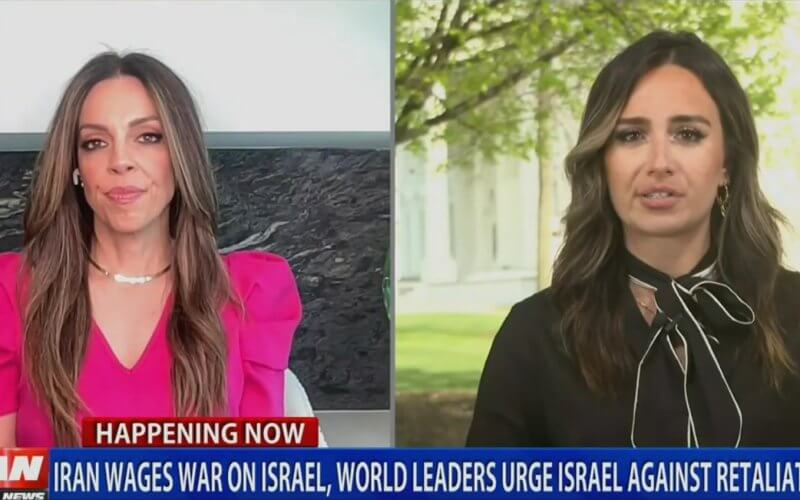
F ox News’ Fox & Friends July 12, 2010 “>

 http://frontpagemag.com/2010/07/09/freedom-fighter-from-afar/

Printed in Front Page Magazine July 9, 2010


Striving for over two decades to make political strides in his homeland, Iranian political activist Roozbeh Farahanipour will have a chance to play out his political ambitions in Westwood, a region of west Los Angeles, which boasts the largest enclave of Iranians outside of Iran.

Farahanipour, founder of the Iranian political party Marze Por Gohar, or Iranians for a Secular Republic, was one of 19 elected in a late June election to the neighborhood council in Westwood. The area is also known as Tehrangeles, or Little Persia; it has a high concentration of Iranian American residents and business owners.

Currently a resident and business owner in Westwood, Farahanipour escaped Iran in 1999 after being convicted of participating in the organization of the Tehran University uprisings. As a result, he was incarcerated in the notorious Towhid Prison.

Gaining political asylum in the U.S., Farahanipour arrived in Los Angeles, and immediately began his activism from a distance.  He left a large constituency ofpolitical party members in Iran, and thus maintained ties and communication with like-minded Iranians.  In Iran, he helped organize local protests, boycotts, and launched a number of newsworthy campaigns.

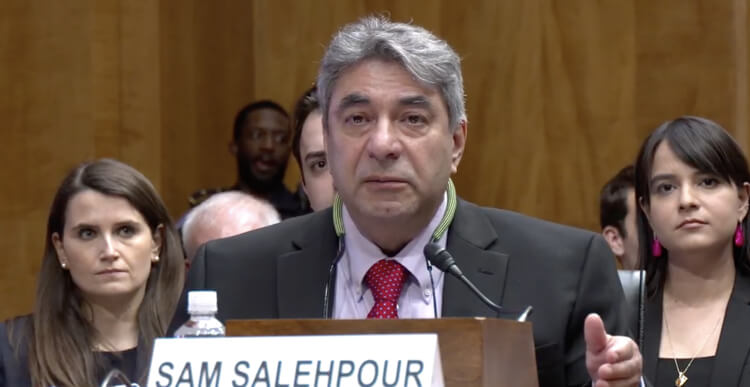
Here in Westwood, he has attempted to build a strong following among Iranian Americans through political activism and community service. He has testified in the California State Senate in favor of divestment from Iran. He has helped unite the Los Angeles community for large-scale demonstrations. Years ago he even chartered an airplane from Los Angeles, taking members of the community to protest against Iran’s human rights violations in front of the United Nations.  Most important, he says, has been his commitment to remain a staunch and devoted Iranian political activist.

“Serving in local politics will allow me to give back to this diverse community made up of Iranians and many other cultures,” said Farahanipour, who owns Delphi, a Greek restaurant in the middle of Westwood Boulevard.

Still not an American citizen, Farahanipour has dreams of going back to Iran and continuing his political goals once the current regime is overthrown.  Revolution is inevitable, according to Farahanipour, whose political party is working to bring down the Islamic regime, and replace it with a secular republic.

In the meantime, he cannot return to his homeland.  Although, in the midst of the demonstrations in Iran this year, Farahanipour illegally slipped back into the country after ten years to help organize protests marking the anniversary of the 1999 uprising.

While he patiently awaits the political plot in Iran to unfold, he is using his time inLos Angeles to build up his political party, and more recently, his resume.

“Although I never imagined myself entering into local politics, it will help me gain important political experience,” he said, referring to his long-term goal of toppling the Islamic Republic.

 Published in Front Page Magazine July 2, 2010

 http://frontpagemag.com/2010/07/02/irans-underground-revolution/2/

As Iranians passed the one-year mark of a tumultuous and historic year, an unimpressive and rather quiet June 12 anniversary left many wondering what happened to the disenchanted Iranians.  Regime threats, issued weeks in advance against protesters engaging in anniversary demonstrations, succeeded in deterring some. However, from its initial moments, this movement was remarkably forged by hundreds of thousands of courageous Iranians who have not let government intimidation discourage them. Journalists, analysts, and politicians questioned the movement’s strength and survival, wondering ifPresident Ahmadinejad, the clerics, and their Revolutionary Guard had succeeded in quashing the masses.

The people of Iran tell a different story. Rather than pouring onto the streets and surrendering to the brutality of regime forces, the Iranian people say they have voluntarily taken a step back. The one-year anniversary of Iran’s fraudulent election has seen a transformation in the Iranian people and consequently, their ongoing movement.

“What’s the point of demonstrating when we are putting up our finest and most intellectual minds to go up against conscienceless guards to be shot at?,” asked Maryam, a 34-year-old radio producer for Iran’s state media in an early morningphone call to Tehran. “People have given up too much over the last year and have since changed their strategy,” she said in her native Farsi.

Maryam is politically active and socially in tune with the changing ambiance in Iran.  She wants regime change for her country. An Iran that is secular anddemocratic is what’s best for everyone, she said.

Among friends, Maryam is considered to be bold, courageous, and even “crazy” for speaking out openly against the regime.  Yet, she could not even use her real name in this interview.

Like many Iranians, Maryam had friends who were arrested and beaten during the protests. She quickly became upset when remembering some of these instances and changed the topic. Iranians have learned a very valuable lesson over the last 12 months, she concluded. They realized that they could be more efficient staying home.

Despite the appearance that the movement has been suppressed in the absence of demonstrations, intellectuals and politically active Iranians like Maryam and her friends are opting to sit home to think, write, publish, and discuss politics.

Welcome to Iran’s Intellectual Revolution.

The shutdown of dozens of Iranian newspapers and media platforms over the last year as a result of demonstration coverage that was unflattering to the regime, left a sizable void that the underground media is effectively filling.  The regime strategically closed official media sites hoping to thwart the spread of anti-government sentiment through traditional media outlets. They simultaneously paved the way for popular and unregulated publications to sprout up by the dozens, including underground newspapers, magazines, websites, blogs, and even night letters—flyers that are circulated in local neighborhoods in the middle of the night and have become a popular method of disseminating important political messages in many Iranian cities and villages.


At the same time, the radical crackdown against protesters and their freedoms sparked a thirst for information and transparency among the Iranian people.

“This is the time to sit back and think about how we can organize and strategize against the government to make significant changes,” Maryam said. “I cannot say too much over the phone.”

She repeated that phrase many times; fearful of getting into too much detail, and almost certain her line was tapped by the government.

As election results were announced last year—significantly ahead of the time it would actually take to count the votes—the regime proved its corruption and provoked its people. Iranians filled the streets in protest not just against a rigged election but also against 30 years of tyrannical rule.

Immediately, and in the days that followed, the regime began a brutal and vengeful crackdown on protesters. The wrath of the regime’s Revolutionary Guard was not enough. Thousands of Basiji militiamen, imported Iraqis, Pakistanis, Saudis, Palestinians, and others, were paid hundreds of dollars each day, equivalent to the monthly salary of many Iranian professionals, to violently and relentlessly attack demonstrators. Tear gas, acid, batons and even guns were used against the people.

The Iranians persisted.  As the government took away their Internet connections, the Iranians found ways to bounce Internet connections through proxy servers. Journalists banned from the country resulted in an emergence of a nation of citizen journalists.  As government forces cracked down against women and murdered Neda Agha-Sultan, women quickly came to the forefront of the movement. When the clerics became more radicalized and religious in their sermons, the Iranian people became more secularized and nationalistic.  It began as a movement for reform and an election debate, but evolved into a battle to regain control of a 5,000 year-old heirloom.


More than half way through this year, the Iranian people gradually realized that in order to be successful in their endeavor, they must have organization and leadership. The biggest obstacle the opposition faces is that they lack both. The Iranians learned that demonstrations would not help gain either. They only put the lives of innocent Iranians at risk. This new-found awareness has given the opposition a new perspective from which to operate.  Iranians are looking to engage one another in meaningful dialogue. They are publishing valuable content, publicizing critical information, and looking for unique ways to communicate political messages to one another.

The alternative, as they witnessed, is watching their loved ones be rounded up and taken to Evin Prison.

Older Posts »